Some days in Tuscany remind me exactly why we chose to live here. Last week, I was lucky enough to have one of those days. In the early afternoon, I visited Fattoria Bistecca, a family-run farm just below Cortona, where I learned to make pecorino cheese and enjoyed a farm dinner that I cannot stop thinking about.
How I Ended Up on a Cheese Farm in Cortona
Sandy Ferretti from Total Tuscany Luxury Retreats set everything up. She and her husband Phil are Americans who now call Montepulciano their home. Over the years, they've built strong connections with local winemakers, chefs, and farm families who help make this part of Italy so special. When Sandy suggests an experience, you always say yes. She has a knack for finding activities that most tourists never hear about.
Sandy posted the event in our expat group on Facebook, where I've also met a handful of other people. I was excited to see that some of the other expats I've met were interested, plus a few new people I hadn't had the chance to meet yet.
I went with my new friends Stacey and Tanya, who runs Amici Vacations, a custom trip-planning and concierge service for Italy. "Amici" means "friends" in Italian, which felt fitting because that's exactly the kind of afternoon we had. I love the idea of sharing a table with people who have each found their own way to fall in love with Italy.
Meet the Bistecca Family
Fattoria Bistecca is the first teaching farm, or fattoria didattica, in the comune of Cortona. It's right in the middle of the Val di Chiana, surrounded by the family's fields of grain, sunflowers, and vines. Ilaria started the farm by restoring her family's old farmhouse and naming it after their longtime family nickname in Cortona: Bistecca. Yes, that means 'steak.'
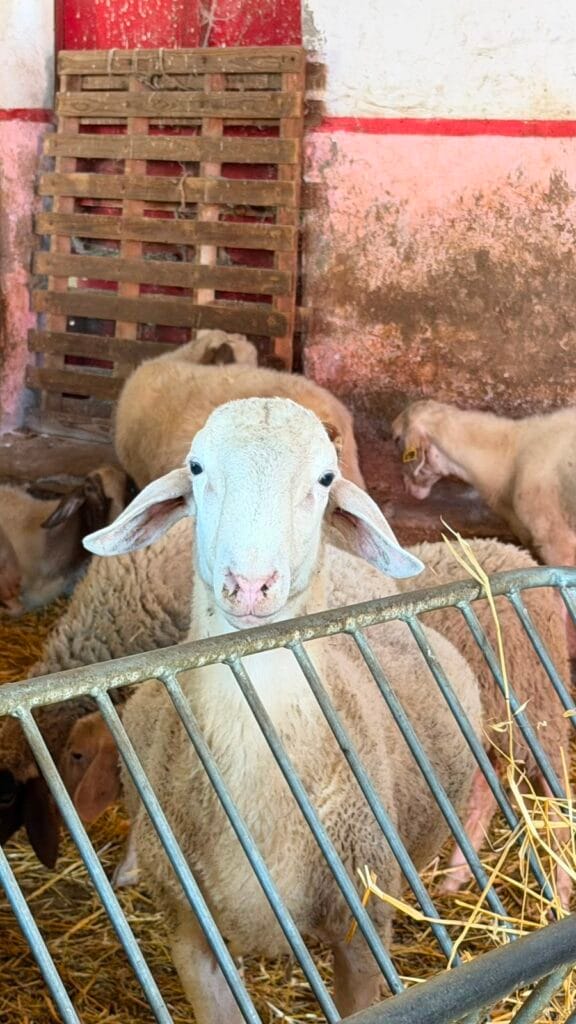
The whole family is involved: Lapo, the patriarch and master cheesemaker, Mamma Paola, and the daughters Ilaria and Laura. When you arrive, you're taken on a tour of the barn and greeted by sheep and chickens, but they also have ponies, geese, ducks, and doves.
They are farmers and shepherds, and have been for four generations — Ilaria is the fourth. Beyond the cheese, the family produces olive oil, wine, and Vin Santo.
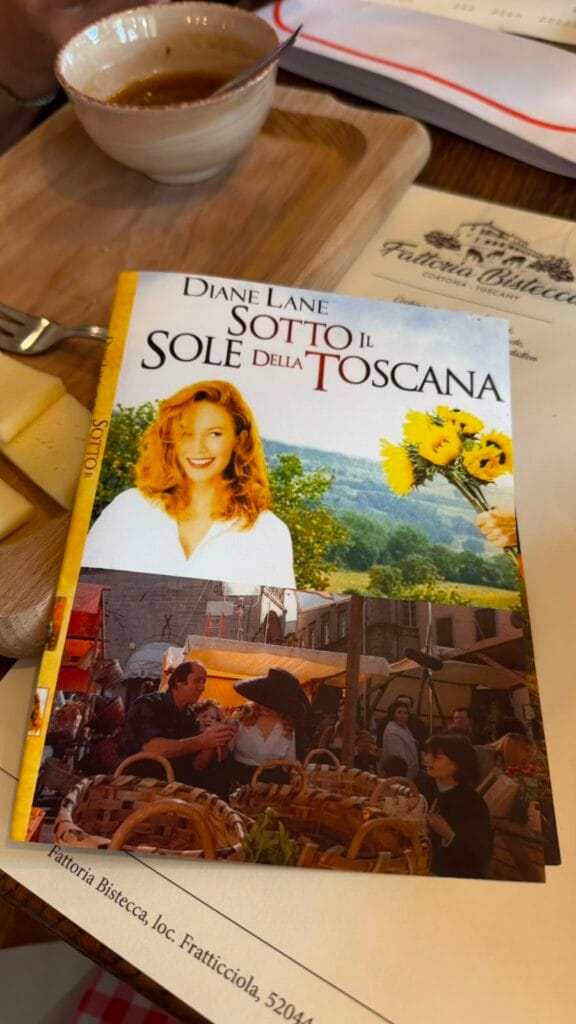
Here's the detail that made me grin: Lapo appears in Under the Tuscan Sun. He's in the busy market scene with his donkey and his sheep. There's movie paraphernalia around the farm and in the kitchen, including a photo of him with Diane Lane, and he looks so happy in it. The whole family is proud of it, and it's very sweet to see.
From Montepulciano, it's not a bad drive, maybe 35 minutes at most. The farm is beautiful, settled in the Chiana valley with stunning views of the countryside.
The Art of Pecorino
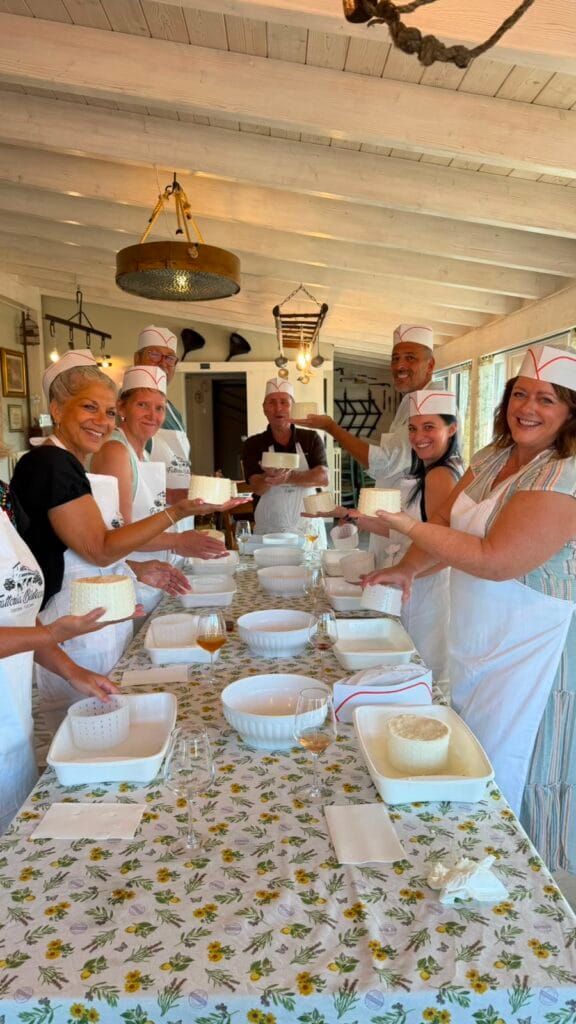
They call the course "L'arte del Pecorino," and it truly is an art. Lapo and Ilaria teach the traditional way of making and aging pecorino, Tuscany's famous sheep's milk cheese.
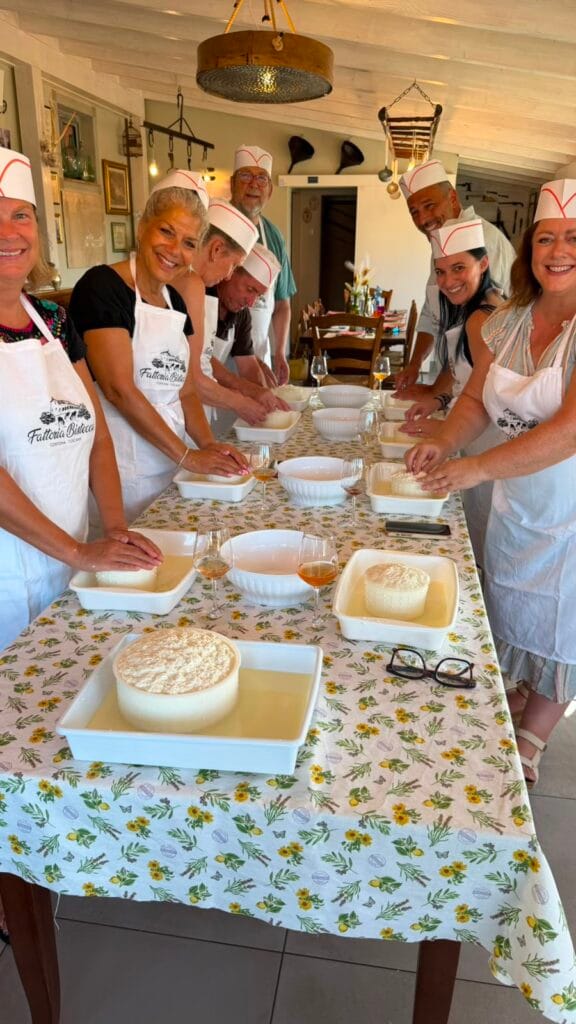
Over the course of the evening, we made three cheeses:
Raveggiolo is a delicate, fresh cheese that most Americans have never heard of. You almost never find it outside Italy because it's meant to be eaten within days. It's the first product to come out of the cheesemaking process, collected with a skimmer straight from the rennet curds, rinsed under cold water, and left to rest in the fridge for ten or fifteen minutes before you eat it.
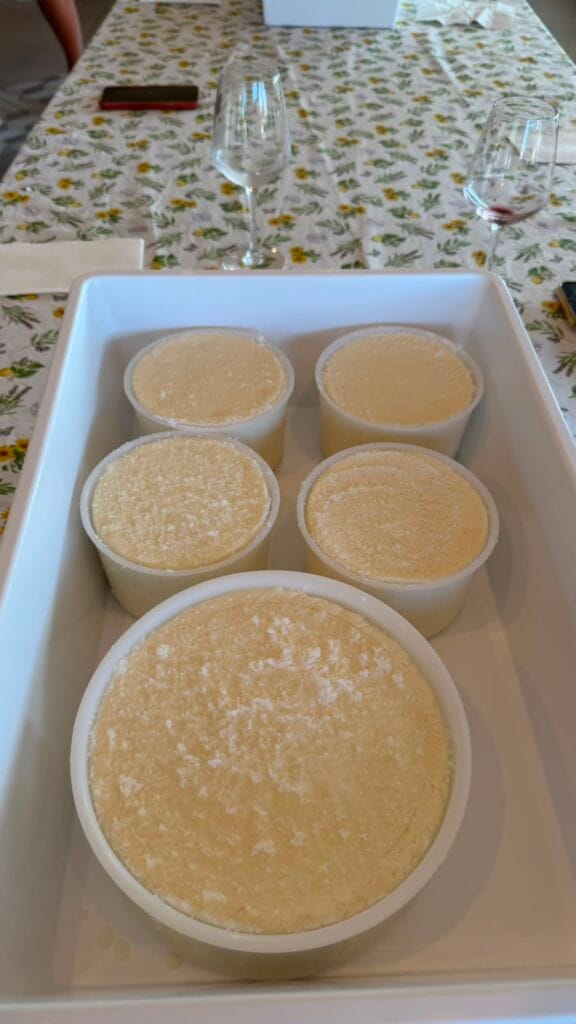
Pecorino is the classic. Watching the curds come together and pressing them into forms, knowing this same process has happened in these hills for centuries, was the kind of hands-on moment I'll remember. The full method runs from the milking to the filtration, coagulation, breaking, and "fishing" the curds out (a new word for me), then pressing, salting, seasoning, and finally aging, which is what shifts the flavor so dramatically from one wheel to the next.
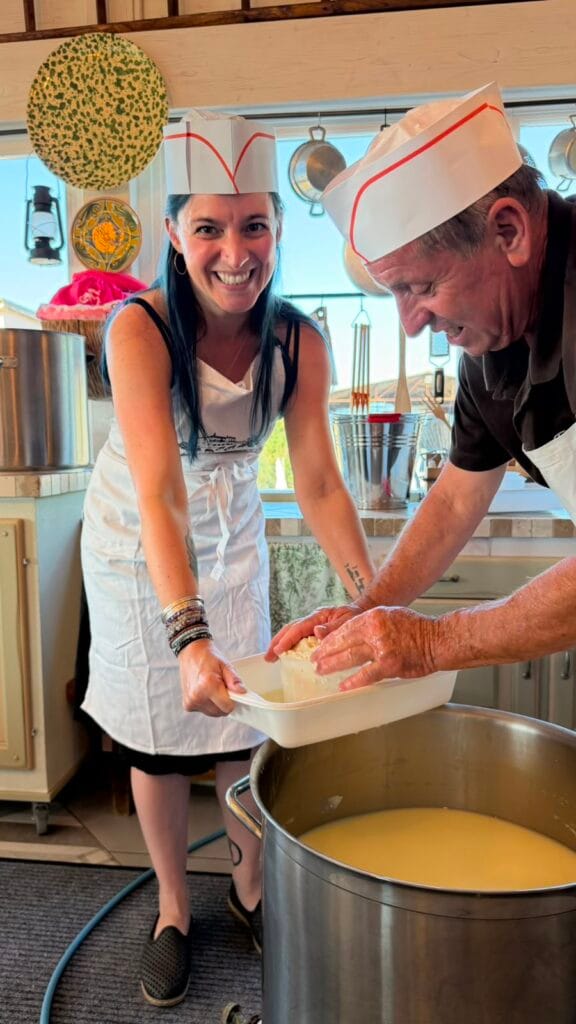
Ricotta — which literally means "re-cooked" — is made from the whey left over from pecorino. Nothing wasted, everything used. That's the farm philosophy in a single cheese. It's the last product of the process: the whey goes into a pot and is heated to 100°C, and you know it's ready by the change in color. The cheese rises to the top thanks to the steam from the boiling whey, and it's lifted out very gently with a slotted spoon into containers that let it keep draining.
Everyone at the event spoke at least a little Italian, and Lapo seemed pleasantly surprised when we asked him to instruct us in Italian. That didn't keep him from singing to us in English as we worked, including "When the Saints Go Marching In" and quizzing us on our knowledge of the days of the week and the months of the year as we worked. Each time we said a word aloud, we turned the cylinder slightly, gently pushing the liquid from the curds. His smile radiated as he watched us work, and you can see his passion for this delicious art form in real time.
Hearing Ilaria talk about the process was its own kind of gift. In an age where so much of the art of things is getting lost, standing in a room with two people who know a craft this well, and who are this proud of it, felt like a rare thing. They should be proud.
Then Came Dinner
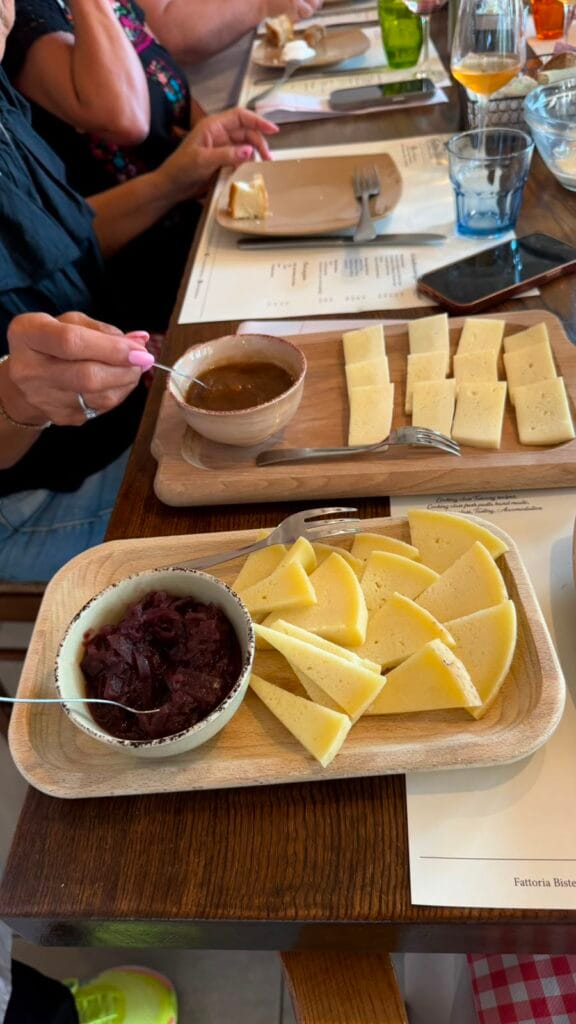
The tasting after the course is a full meal in itself. It includes Tuscan bruschette, pecorini at different ages, pasta with cheese, and fresh ricotta with jam. Everything is made on the farm and served with wine from Casale della Torre, the agriturismo run by their family.
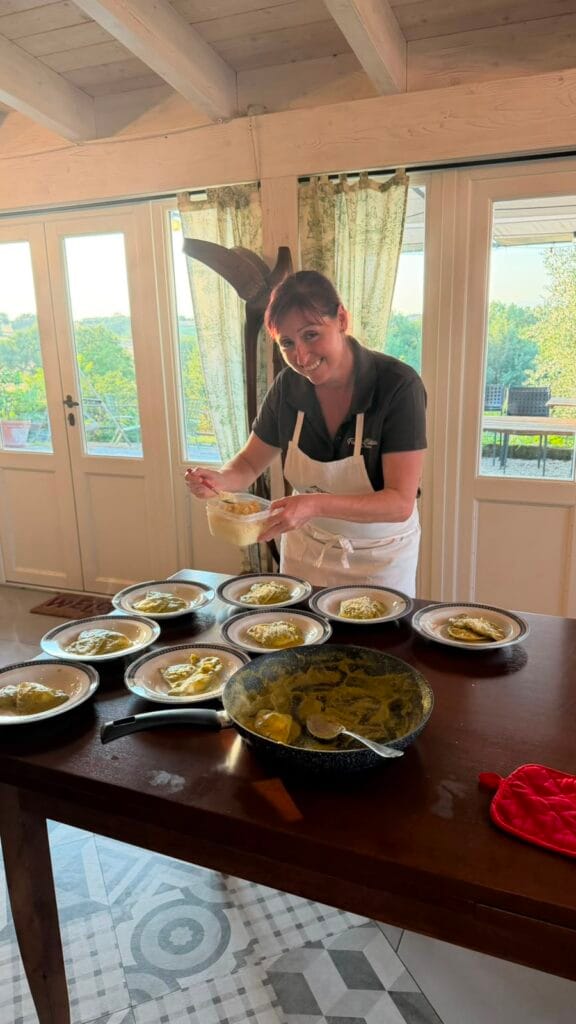
Every cheese we made that evening found its way onto the table. The raveggiolo came out first with the bruschetta, the aged pecorini followed as part of the antipasti, and there was pecorino in our ravioli, too.
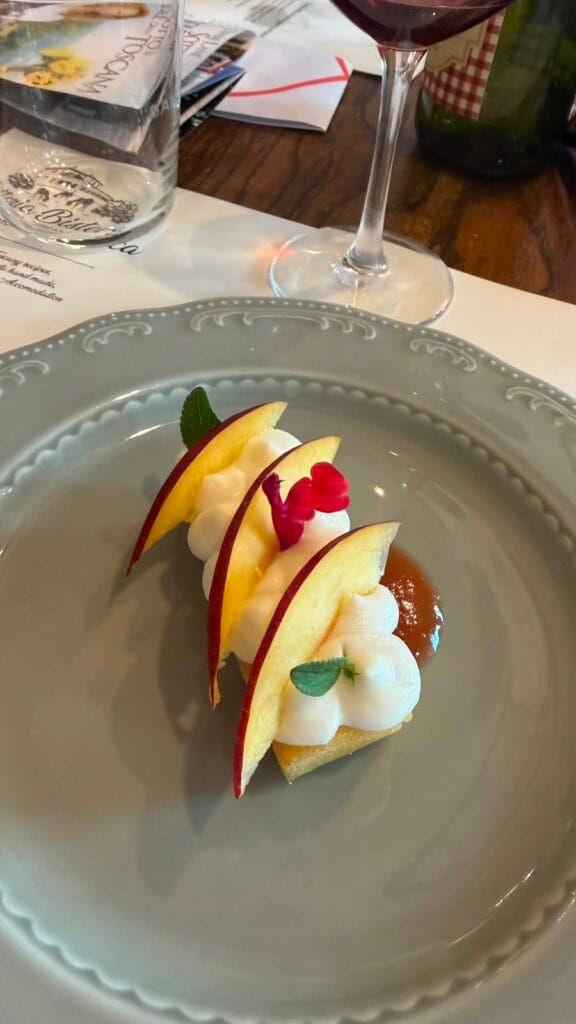
As soon as we passed around a plate, Chef Ilaria appeared with a new one. Fresh ravioli with pesto, grilled eggplant and zucchini, bread with olive oil and garlic, and to end the meal, a sponge cake with ricotta, peach and mint. That dessert was absolutely delicious.
I sat at the end of the table and, every few minutes, enjoyed locking in on the buzz of conversation, with everyone smiling and nodding in agreement about how delicious everything was. Curiosity and appreciation for the finer things will always make for amazing dinner conversation and atmosphere.
This is why I believe the best meals in Tuscany aren't found in restaurants, but at farm tables. The wine is made from grapes grown by the same person who made the cheese on your plate, using milk from that very morning.
What We Took Home
Ilaria and Lapo made sure none of us left empty-handed. There were postcards, information about the movie, and material about the cheesemaking process. But my favorite thing is a little booklet that walks through every step of each cheese we made together, from what pecorino actually is all the way through the milking, filtration, coagulation, breaking, fishing, pressing, salting, seasoning, and aging — plus the raveggiolo and the ricotta. I'll be keeping that one.
We also each left with a certificate: a Cheese Making Class with Bistecca Mastro Casaro certificate of merit, for having learned the old method for the production and maturation of raveggiolo, pecorino, and ricotta, and for rating and recognizing the quality and taste of these flavors. That was really cool.
Where to Stay: Agriturismo Casale della Torre
The same family owns Agriturismo Casale della Torre, which I'm already planning to book. It's two renovated stone houses with the original wood-beamed ceilings and Tuscan terracotta tile floors, a short stroll from the center of town.
The location is what gets me. It sits near the ancient hamlet of Torreone and Cortona's Medici fortress, the Fortezza del Girifalco — and not far from Bramasole, the villa from Under the Tuscan Sun. The farm itself is a few kilometers away, down in the Chiana Valley. Stay tuned, because once I book a stay, I'll report back on everything you can do there.
Planning Your Own Visit
If you're planning a trip to this part of Tuscany, here's what you need to know:
The farm is at Loc. Fratticciola, about 8 km from Cortona and just 5 km from the Valdichiana junction on the A1. It's easy to reach from Montepulciano, Pienza, Siena, and even Lake Trasimeno in Umbria.
They offer courses on making Pecorino cheese, cooking classes with traditional Tuscan recipes like pici, tagliatelle, and gnocchi from Nonna Dinda and Zia Anna, farm visits with tastings, and themed dinners by reservation. There's also a farm stay called Casa del Fattore, which has been beautifully restored and has a panoramic terrace overlooking the sunflower fields and vineyards.
To book, email info@fattoriabistecca.com or visit fattoriabistecca.com. If you want a similar experience as part of a fully organized trip, Sandy and Phil offer that through Total Tuscany. If you prefer a custom, self-guided itinerary, reach out to Tanya at Amici Vacations, or take a day trip from Montepulciano. And now, if anyone asks me, I'll say don't just see the town; actually get your hands into the curds at Fattoria Bistecca.