If you're planning a trip to Italy around Easter, Tuscany might just be the most rewarding place to be. Easter — Pasqua in Italian — is one of the most significant holidays of the year here, and in Tuscany it's celebrated with a particular blend of deep Catholic ritual, centuries-old regional tradition, and very good food. For American travelers used to Easter meaning brunch and a chocolate bunny, the Tuscan version is something else entirely.
Here's what to expect, from the processions winding through hilltop piazzas to the lamb and wine on the table afterward.
Holy Week: More Than Just Sunday
Easter in Tuscany doesn't begin on Sunday morning. It builds across the entire week leading up to it — La Settimana Santa, or Holy Week — and if you're visiting during this period, the energy in towns like Siena, Arezzo, and San Miniato is unmistakable.
Palm Sunday kicks things off with church processions and the blessing of olive branches (Tuscans use olive rather than the tropical palms common in other countries — a detail that feels perfectly on-brand for the region). The mood becomes more solemn through Thursday and Good Friday, when you'll find candlelit processions moving through the narrow stone streets after dark. These aren't performances for tourists; they're genuinely moving community rituals that have taken place in the same towns for hundreds of years.
If you happen to be in Florence on Easter Sunday morning, make a point of witnessing the Scoppio del Carro — the Explosion of the Cart. A towering, centuries-old, decorated cart is wheeled into the Piazza del Duomo and, during Easter Mass, a mechanical dove shoots out from the altar along a wire, igniting it in a cascade of fireworks and smoke. It's spectacular, deeply strange, and entirely Florentine. Arrive early; the piazza fills up fast.
Easter Sunday Itself
Easter Sunday in Tuscany is centered on family, Mass, and the table. Most Italians attend morning Mass before gathering at home for a lunch that can stretch late into the afternoon. As a visitor, this is worth knowing: expect restaurants to be busier than usual, many with fixed Easter menus, and some family-run spots closed entirely so the owners can celebrate with their own families. Book ahead.
The streets quiet down on Sunday, but Easter Monday (Pasquetta, meaning "little Easter") has a very different energy. It's a national holiday, and Italians traditionally spend it outdoors. You'll find families picnicking in the countryside, hiking through vineyards, and enjoying the spring weather. It's one of the loveliest days to be in the Tuscan hills.
What You'll Eat
The Tuscan Easter table is one of the great arguments for traveling during a holiday. The food is seasonal, specific to the region, and largely unavailable at any other time of year.
Lamb is the centerpiece of most Easter lunches, and in Tuscany it's often prepared simply — roasted with rosemary, garlic, and olive oil — in a way that lets the quality of the meat speak for itself. Abbacchio, the milk-fed lamb common in Rome, gives way to slightly older lamb in Tuscany, which has a deeper flavor. You'll see it on restaurant menus all week.
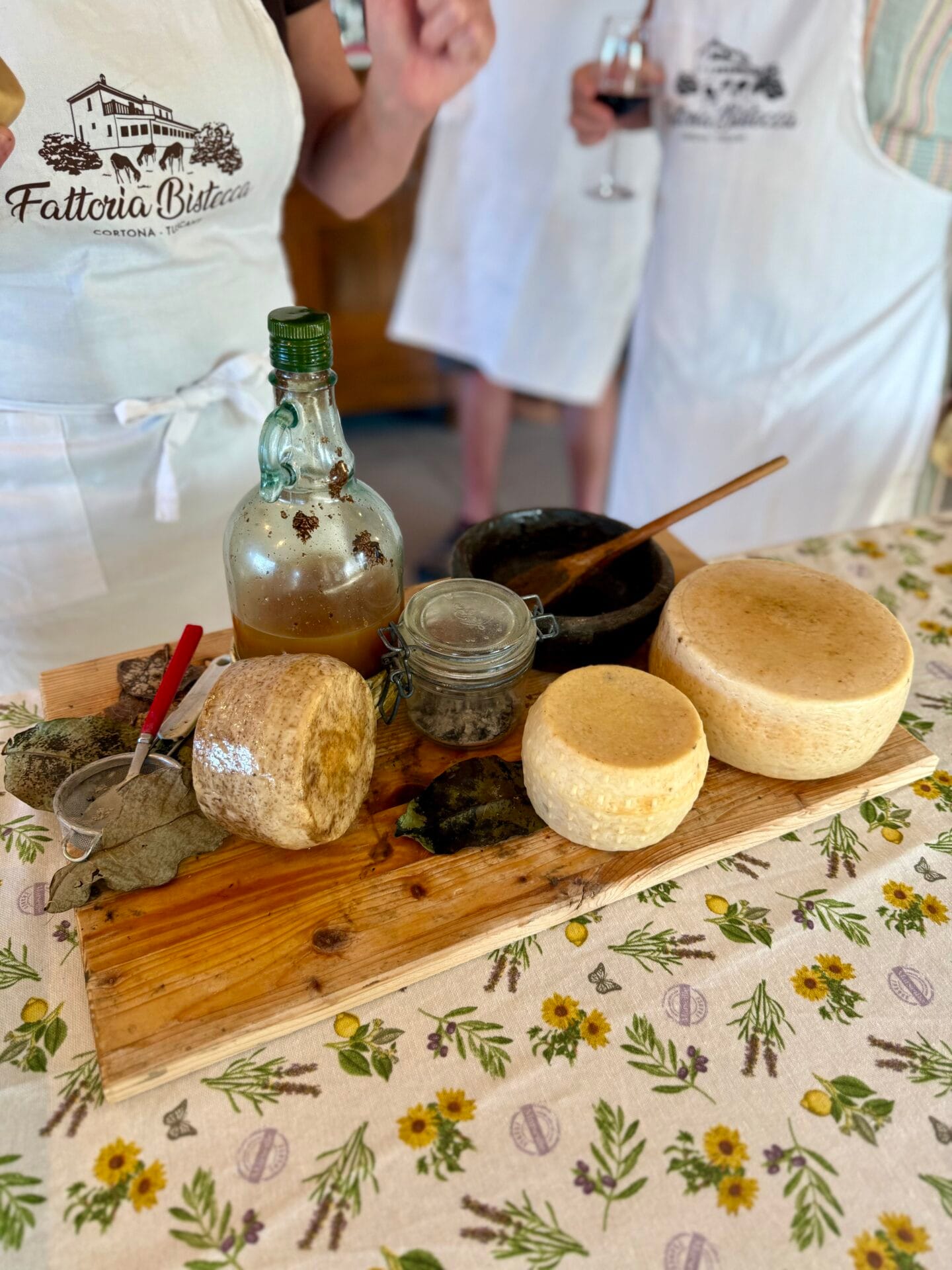
Torta di Pasqua, or Easter cake, comes in both sweet and savory varieties, and Tuscany leans toward savory. The Tuscan version is a tall, risen cheese bread made with pecorino and eggs, traditionally eaten at Easter breakfast or as an antipasto. It's rich, slightly salty, and unlike anything you'll find the rest of the year. If you're staying somewhere with a market nearby, it's worth picking one up.
Colomba is the Easter equivalent of panettone — a dove-shaped sweet bread made with candied orange peel and topped with pearl sugar and almonds. You'll see it in every bakery and supermarket from late February onward, but the ones from a proper Tuscan forno are worth seeking out over the mass-produced versions. The name means "dove," a symbol of peace and the Holy Spirit.
Frittata di erbe — herb frittata — is another Easter table staple, made with whatever spring greens are in season. Wild asparagus, fresh herbs, spring onions: this dish is a direct expression of the landscape waking up after winter, and Tuscany in April has no shortage of good things growing.
And then there's wine. Easter in Tuscany is also, frankly, a wine occasion. A lunch with lamb calls for something structured — a Vino Nobile di Montepulciano or a Chianti Classico — and you'll find that the wine lists at Easter lunches reflect the seriousness with which Tuscans approach the meal. If you're visiting a winery in the region during Holy Week, ask whether they do any special Easter tastings; some estates pair seasonal food with their wines in a way that's hard to replicate elsewhere.
Tips for Visiting Tuscany at Easter
Book accommodation and restaurants well in advance. Easter is one of the busiest travel weeks in Italy, and Tuscany — already popular in spring — fills up fast. This is especially true for agriturismos, which often host full Easter lunch experiences that sell out months ahead.
Plan around the closures. On Easter Sunday, expect many shops, markets, and smaller restaurants to be closed. Come Monday, things reopen, and the holiday mood continues. Use Sunday for the processions and a long lunch; save Monday for exploring.
Embrace the pace. Easter in Tuscany moves slowly and deliberately. Lunches last hours. Processions don't start on schedule. The best approach is to build a loose itinerary and leave plenty of room for the day to unfold on its own terms — which, in Tuscany in spring, is rarely a hardship.
Easter is one of those moments when Italy feels most like itself. The rituals are old, the food is deeply rooted in place and season, and the general impulse to gather around a table with the people you love translates across every cultural barrier. Tuscany in April is beautiful on any given day, but catch it at Easter, and you'll see something that takes a little longer to forget.